Efficient Deck Hand
The Efficient Deck Hand course is an integral part of the Able Seafarer and Officer of the Watch (OOW) certifications, and includes seamanship skills, rope work and rigging and the Code of Safe Working practices amongst a host of other subjects and topics.
Efficient Deck Hand – What is the EDH course and who is it for?
The Efficient Deck Hand course is an integral part of the Able Seafarer and Officer of the Watch (OOW) certifications, and includes seamanship skills, rope work and rigging and the Code of Safe Working practices amongst a host of other subjects and topics.
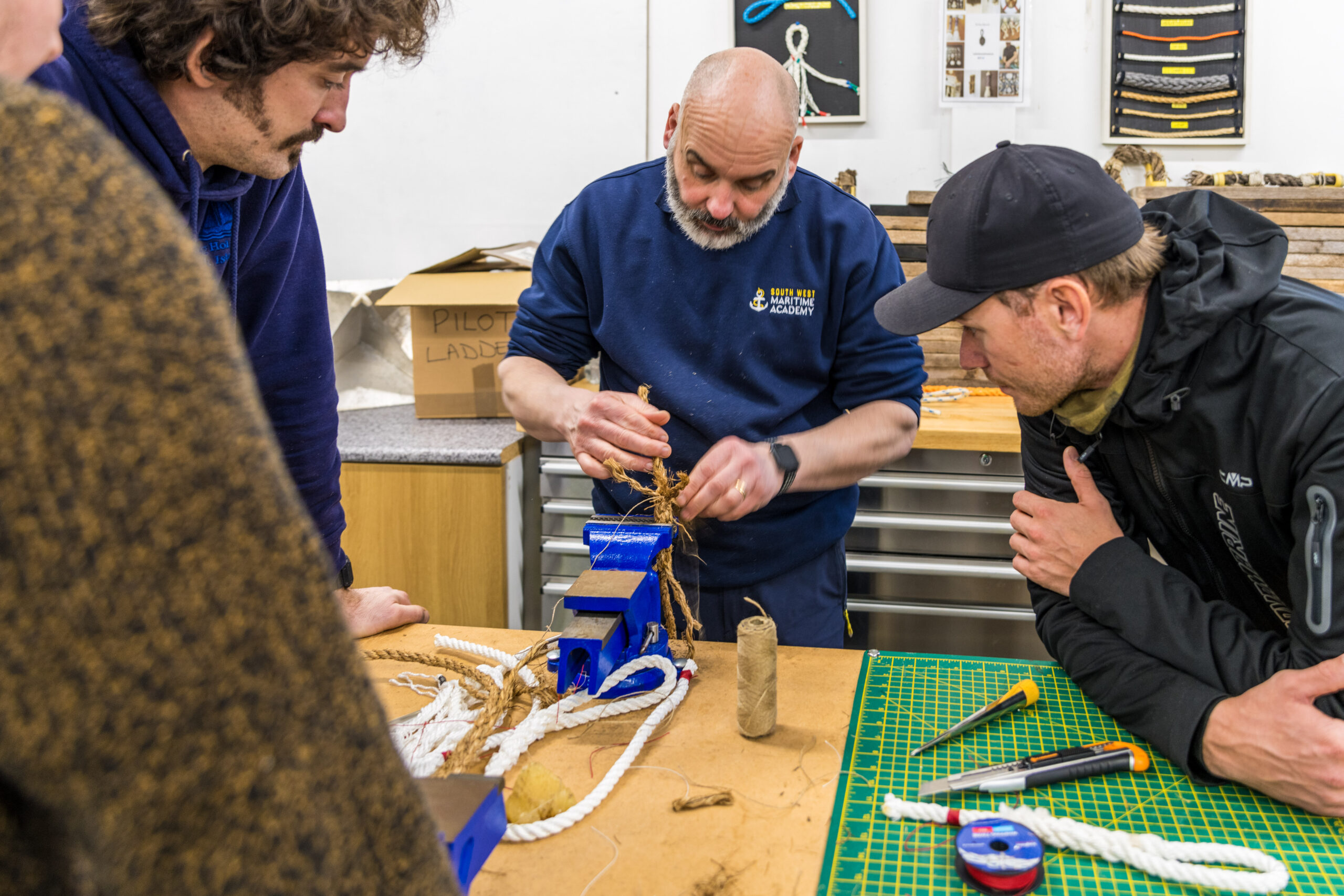
Our EDH course leans heavily towards practical, hands-on learning and is a great opportunity to quite literally learn the ropes.
The course covers all the essential skills required to be an effective deckhand, and develops your seamanship skills and ships’ knowledge, helping to promote both safe and efficient working when on vessels.
The Efficient Deck Hand course runs over 5 days, and combines a good mix of both theory and hands-on practical learning, creating a fun and engaging learning environment.
What does The Efficient Deck Hand Course (EDH) cover?
The EDH course curriculum is comprehensive and covers a wide range of essential topics. Some of the key areas covered include:
Nautical Knowledge
Your nautical education begins with mastering essential maritime vocabulary and identifying key ship components, from decks and compartments to complex pipeline systems. You’ll learn the proper protocol for displaying ensigns, courtesy flags, and international signal flags. Proficiency in navigation is crucial, so you’ll practice reporting bearings using compass cards and 360-degree notation. Effective communication is paramount; you’ll gain a solid understanding of helm orders and learn how to communicate seamlessly with the officer of the watch during watch-keeping duties.
You’ll also learn the procedures for watch handover, ensuring a safe and continuous watch. Crucially, you’ll develop a strong understanding of lifesaving and fire-fighting equipment. This includes recognizing the importance of musters and drills, understanding alarm signals, and knowing how to respond in emergencies. You’ll become familiar with fixed smothering systems, lifeboat release gear, boat launching procedures, and the maintenance of lifeboats and davits. Finally, you’ll learn the function and operation of fire and watertight doors.
Shipboard Maintenance
You’ll gain hands-on experience in general shipboard maintenance, mastering the use of painting, lubrication, and cleaning materials and equipment, alongside routine repair procedures. You’ll learn essential surface preparation techniques, and how to adhere to manufacturer’s safety guidelines and shipboard instructions, including the safe disposal of waste. Proficiency in using and maintaining both hand and power tools is a key focus. Simultaneously, you’ll develop a strong understanding of marine environmental protection, learning to apply precautions to prevent pollution, operate anti-pollution equipment, and utilize approved methods for marine pollutant disposal.
The practical component of the course ensures you can apply your knowledge in real-world scenarios. You’ll demonstrate your mastery of essential knots, bends, and hitches, including the reef knot, timber hitch, cove hitch, rolling hitch, figure of 8 knot, wall and crown knot, bowline and bowline on the bight, sheet bend and double sheet bend, sheepshank, fishermen’s bend, monkey’s fist, round turn and two half hitches, and marlinspike hitch.
Splicing and Whipping
You’ll master essential splicing and whipping techniques, including creating splices in eight-stranded plaited rope, performing back and short splices in three-stranded rope, and executing eye splices with locking tucks in wire rope. You’ll also learn to parcel and serve a splice, whip rope ends using both plain and palm-and-needle methods, and properly apply seizing to ropes and wires.
Rope Work and Rigging
You’ll develop comprehensive skills in general deck work, starting with the proper care and storage of essential equipment like fibre and wire ropes, cables, and chains. This includes understanding their construction, use, marking, maintenance, and stowage. You’ll also learn how to safely sling and rig stages and bosun’s chairs, and how to handle pilot ladders, hoists, gangways, and accommodation ladders. The importance of rat guards will be covered, along with the techniques for rigging derricks and cranes.
You’ll gain expertise in selecting and using stoppers for wires and ropes, and learn the procedures for opening and closing hatches and watertight doors, including bow, stern, and other shell doors. You’ll master the precautions needed for operating winches during cargo work and warping, and learn how to secure the deck for heavy weather. Rigging hydrostatic release units and the correct fitting of wire grips, like ‘Bulldog’ grips, will also be taught, completing your comprehensive deck work training.
Mooring
You’ll gain a thorough understanding of mooring operations, learning the specific functions of mooring and tug lines within the overall system. Emphasis will be placed on the safe handling of moorings, particularly with synthetic-fibre ropes and self-tensioning winches. You’ll master the correct procedures and sequence of events for making fast and letting go mooring, tug, and towing lines, as well as the specialized techniques for mooring to buoys.
Anchoring
This section provides a thorough understanding of anchoring procedures. You’ll learn how to operate a windlass for various anchor-related tasks, including anchoring, weighing anchor, and warping, and understand its vital role in securing the vessel. You’ll also explore the use of anchors in emergency scenarios, and the importance of proper chain cable stowage and anchor securing. You’ll learn to interpret anchor cable markings and follow the established procedures for safe and effective anchoring.
Cargo Work
Become proficient in cargo work operations, gaining a thorough understanding of the various gear used and their specific applications. You’ll learn to perform general maintenance on crucial equipment like wires, blocks, and shackles, and understand the importance of capacities, safe working loads, and breaking strengths for both mooring and cargo equipment. Master the procedures for safe handling, stowage, and securing of cargo and stores, including dangerous, hazardous, and harmful substances and liquids. You’ll also develop the ability to use and interpret basic signals for operating equipment such as winches, windlasses, cranes, and hoists. Finally, you’ll gain essential knowledge of the precautions to observe when handling different cargo types, including the identification of IMDG labelling.
Who needs the Efficient Deck Hand ticket?
This course is a requirement for: