The STCW Advanced Fire Fighting course is a mandatory qualification for deck and engineering officers qualifying for their Certificates of Competency (CoC), as well as designated crew responsible for controlling and coordinating firefighting operations aboard commercial vessels, superyachts, workboats, and cruise ships.
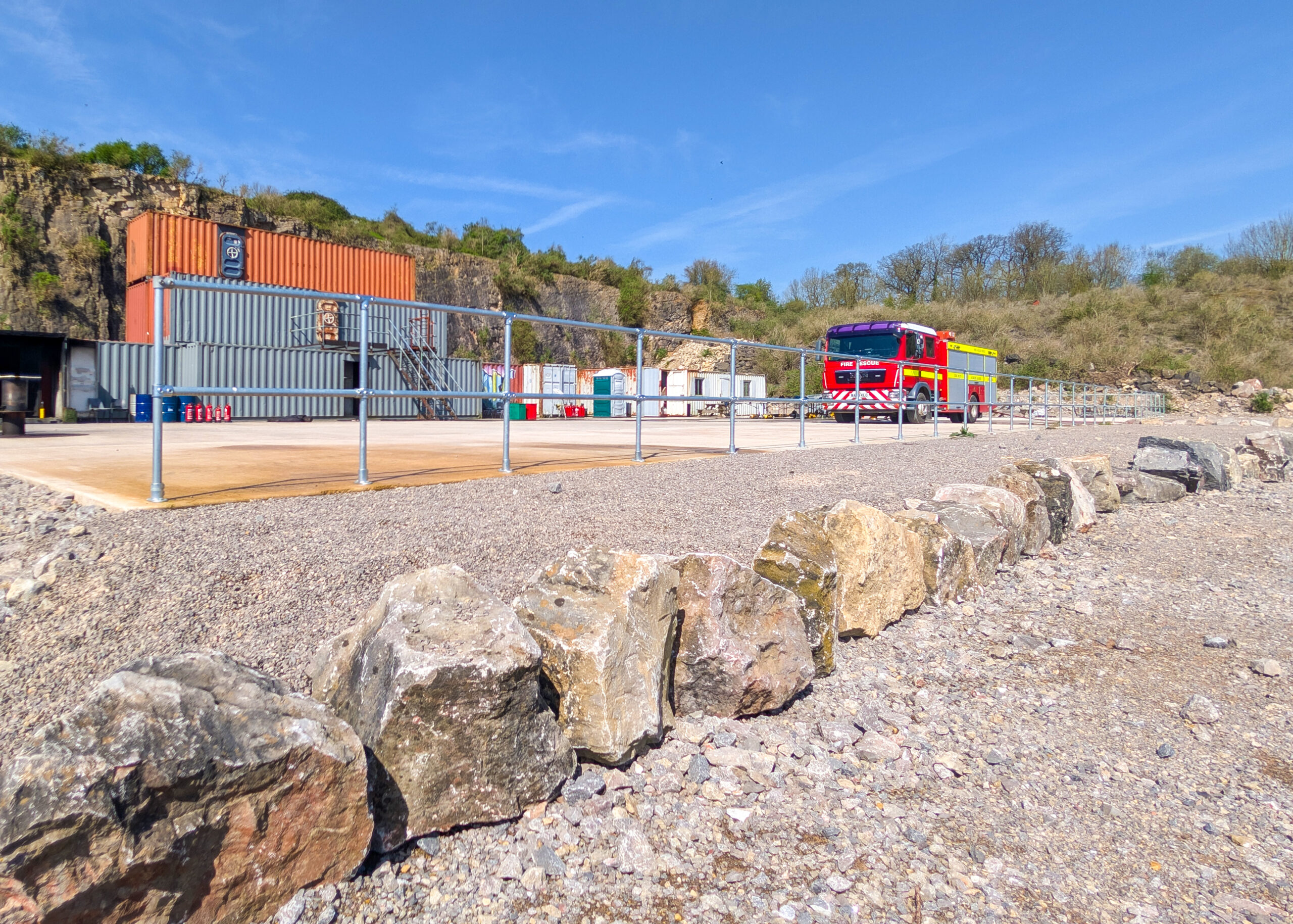
Building substantially upon foundational fire fighting principles, this intensive 4-day course places critical emphasis on Command, Control, and Incident Leadership. Operating from our dedicated fireground facility in South Gloucestershire, delegates master live tactical entries, breathing apparatus team deployment, compartment smoke ventilation, stability mitigation, and strategic liaison with external response teams.

Course Specifications
- STCW Fire Prevention and Fire Fighting (FPFF)
- MNTB Stage One Fire Fighting Certificate
- Royal Navy Fire Fighting Course (MCA recognised)
Already hold an STCW Advanced Fire Fighting ticket?
Looking for the 1-Day UAFF Refresher?
Booking Info
What Does the STCW Advanced Fire Fighting Course Cover?
A comprehensive 4-day syllabus balancing practical tactical leadership with regulatory command protocols on our dedicated fire training ground.
1. Command, Control & Fire Organisation
Establish tactical authority, delegate roles to emergency response teams, and organize shipboard command posts under critical pressure.
- Fire Control Plans: Rapid interpretation of statutory shipboard safety graphics, damper controls, and isolation valves.
- Team Leadership: Marshalling, briefing, deploying, and debriefing emergency fire parties and backup squads.
- Dynamic Risk Assessment: Continual appraisal of fire progression, hazardous zones, and crew welfare.
2. Tactics, Breathing Apparatus & Heavy Smoke
Command advanced search and rescue patterns in enclosed compartments with zero visibility and intense heat.
- BA Control Protocols: Managing BA tallies, entry control boards, stage cylinder pressure calculations, and relief cycles.
- Thermal Imaging: Deploying TIC units to locate deep-seated fire seats and unaccounted personnel.
- Search & Extraction: Tactical lead-line searches, casualty extrication, and guiding teams through compromised ship spaces.
3. Fixed Extinguishing Systems & Detection
Master the operation, precautions, and safe discharge protocols for total flooding and localized containment systems.
- Gas Smothering: Pre-discharge alarms, boundary evacuation, and operating High-Pressure CO2 and Novec/Inergen banks.
- Water-Mist & Drenchers: Activating machinery space local application systems, high-expansion foam, and sprinkler zones.
- Detection Hardware: Optical smoke, heat, flame detectors, and interpreting bridge fire panels.
4. Vessel Stability & Free Surface Effects
Analyse and manage the dangerous interaction between firefighting water volume and shipboard transverse stability.
- Free Surface Risk: Assessing retained water hazards on car decks, vehicle spaces, and compartment bulkheads.
- Scupper & Drainage: Clearing blocked deck drains, operating scupper pumps, and maintaining list stability.
- Coordination: Calculating dynamic stability shifts with the Chief Engineer and Master during suppression.
5. Fire Tactics at Sea vs. In Port
Adapt emergency command strategies across differing navigational states, port environments, and dangerous cargo interfaces.
- At Sea: Managing isolated vessel emergencies where external assistance is days away, relying solely on ship assets.
- In Port & Drydock: Coordinating with municipal shore fire brigades, international shore connections (ISC), and harbor authorities.
- Dangerous Goods: Managing dangerous goods fires in accordance with the IMDG Code and Emergency Schedules.
6. Casualty Extrication & Investigation
Lead the safe removal of injured personnel and carry out post-incident investigations, reporting, and equipment reconstitution.
- Casualty Evacuation: Rescuing casualties from engine room lower flats and holds using stretchers and hoists.
- Reporting & Evidence: Compiling statutory marine incident reports for the MCA and MAIB.
- Re-Servicing Equipment: Recharging cylinders, testing hoses, and returning safety gear to instant readiness.
Advanced Fire Fighting FAQs
Who is required to take the STCW Advanced Fire Fighting course?
What are the exact prerequisites for attending the full AFF course?
How long is the STCW Advanced Fire Fighting certificate valid for?
Does completing AFF remove the requirement to update Basic Fire Fighting (FPFF)?
How physically demanding is the training?
What clothing and gear should I bring?
Can this course be booked as part of an update package?
Already Hold Advanced Fire Fighting?
If you already possess a full 4-day Advanced Fire Fighting certificate, you do not need to repeat the full initial course to stay compliant at sea. Under the STCW 2010 Manila Amendments, your qualification can be revalidated by completing our MCA-approved 1-Day Updated Proficiency in Advanced Fire Fighting (UAFF).
Accommodation & Support
Contact & Group Enquiries
Telephone: 01454 260130
Email: info@southwestmaritimeacademy.com
Monday – Friday: 08.30 – 17.00
Local Accommodation
There is a wide range of local accommodation, some of which are within walking distance of the training centre, to suit everyone's budget.