Protect your workforce from musculoskeletal disorders and improve operational efficiency with our certified GWO Manual Handling (MH) Initial Module. Delivered at South West Maritime Academy under the revised GWO BST V20 Standard, this dedicated ½-day standalone course provides the essential ergonomic principles, behavioural safety techniques, and practical handling strategies required to work safely across wind turbine generator (WTG) environments.
From dynamic risk assessments using the TILE framework to managing awkward postures, tool vibration, and team lifting in confined turbine compartments, our Manual Handling Initial Training (MH) combines physiological awareness with realistic workplace simulations. Gain the essential, globally recognised certification required for onshore and offshore wind site compliance across the UK and internationally.
GWO Manual Handling Details
Booking Info
Cromhall Quarry, Cromhall, South Gloucestershire, GL12 8AA.
Already hold an in-date GWO Manual Handling certificate?
Looking for the GWO Manual Handling Refresher (MHR)?Ergonomic Excellence in Wind Energy: GWO Manual Handling Module
In modern wind turbine generators, technicians frequently operate within restricted spaces, navigate vertical ladder systems, and handle heavy, awkward components under challenging conditions. The GWO Basic Safety Training Manual Handling Module is specifically designed to reduce the risk of musculoskeletal injuries (MSDs) and foster a proactive, lifelong behavioural safety culture.
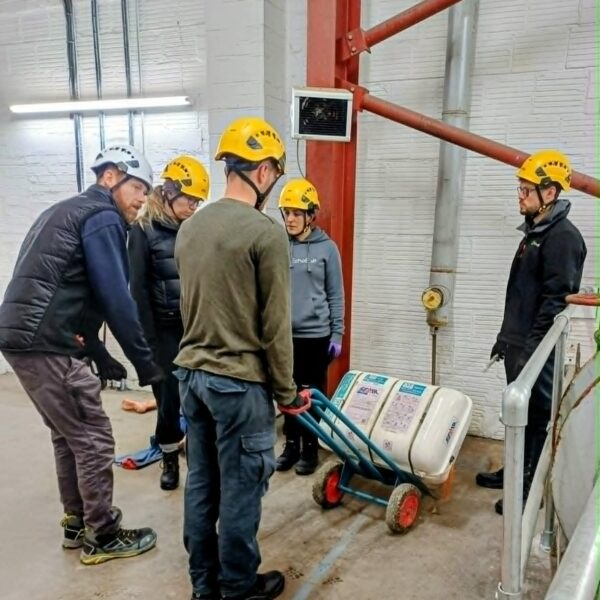
Under the revised GWO BST V20 Standard, Manual Handling is delivered as an intensive, standalone module. Moving beyond classroom theory, the course embeds practical ergonomics directly into task-specific scenarios—including pushing and pulling across transition pieces, kneeling maintenance, handling vibrating power tools, and executing coordinated team lifts.
1. Musculoskeletal Health & Injury Prevention
Understand spinal mechanics, identify early onset symptoms of muscular strain, and take proactive responsibility for physical health.
- Spinal Mechanics: Analysing spinal and shoulder models to understand disc compression, ligament strain, and cumulative load risks.
- Symptom Recognition: Identifying early indicators of musculoskeletal disorders (MSD) and taking immediate corrective action.
2. Dynamic Risk Assessment & The TILE Principle
Apply structured assessment methodologies before undertaking any manual lifting, carrying, or moving operations in a turbine.
- TILE Framework: Evaluating the Task, Individual capability, Load characteristics, and Working Environment prior to physical tasks.
- Lifting Filters: Applying guideline filters for lifting and lowering zones to identify high-risk manual tasks.
3. Hierarchy of Controls & Handling Aids
Prioritise eliminating manual handling through mechanical assistance, technical planning, and appropriate equipment.
- Control Hierarchy: Implementing elimination, substitution, engineering controls, and administrative measures before manual lifting.
- Mechanical Aids: Utilising hoists, cranes, trolleys, slings, and transport aids to minimise physical strain.
4. Handheld Tools & Vibration Control
Safeguard against long-term occupational illnesses caused by repetitive tool work and mechanical vibration.
- HAVS & RSI Mitigation: Controlling exposure to Hand-Arm Vibration Syndrome and Repetitive Strain Injury during bolt tensioning and maintenance.
- Protective Controls: Implementing job rotation routines, regular pauses, and specialised anti-vibration gloves.
5. Task-Specific WTG Handling Scenarios
Master practical lifting and posture techniques tailored to the physical layout and constraints of wind turbines.
- Awkward Postures: Executing safe manual handling while working kneeling, over shoulder height, and in confined areas.
- Push, Pull & Carry: Moving loads across transition pieces, thresholds, ramps, stairs, and during team lifts up to 30kg.
Complete BST Training Package
Need all mandatory GWO modules for comprehensive onshore or offshore turbine access? Book our complete 4.5-day BST package:
Full Pathway Package:
GWO Basic Safety Training (BST) PackageThe SWMA Advantage: Practical Turbine Ergonomics
At South West Maritime Academy, we believe manual handling should be taught in the exact physical context where technicians work. Rather than generic warehouse lifting drills, our training utilises realistic wind industry props, confined compartment mock-ups, and turbine hardware.
Our experienced instructors instil an active warm-up routine and practical habits that protect your spine, shoulders, and joints in demanding operational environments. Delegates benefit from supportive coaching, immediate peer feedback, and fast WINDA certification uploads within 24 hours.
Entry Requirements
This GWO Manual Handling Initial course is designed for anyone working, or seeking employment, in the onshore and offshore wind energy sector. It provides wind turbine technicians, mechanical engineers, blade repairers, and site operatives with mandatory ergonomic and lifting skills.
The module involves practical lifting, carrying, pushing, pulling, and working in awkward postures. Full attendance and active participation across all practical exercises are required to receive GWO certification.
- Minimum Age: Participants must be at least 18 years of age.
- Physical Health: Candidates must be in good physical health and capable of performing practical manual handling tasks. A standard medical self-declaration is completed prior to course commencement.
- WINDA Registration: Delegates must register on the GWO WINDA database and obtain a WINDA ID before starting the course.
- Prior Experience: No previous manual handling experience or qualifications are required for this initial module.
Contact & Accommodation
Corporate & Group Enquiries
Telephone: 01454 260130
Email: info@southwestmaritimeacademy.com
Monday – Friday: 08.30 – 17.00
Local Accommodation
There is a wide range of local accommodation, some of which are within walking distance of our training centre at Cromhall Quarry, to suit every budget.